Wisconsin Tornado Rated EF3
Peak winds in the twister are estimated to have been 140 mph.

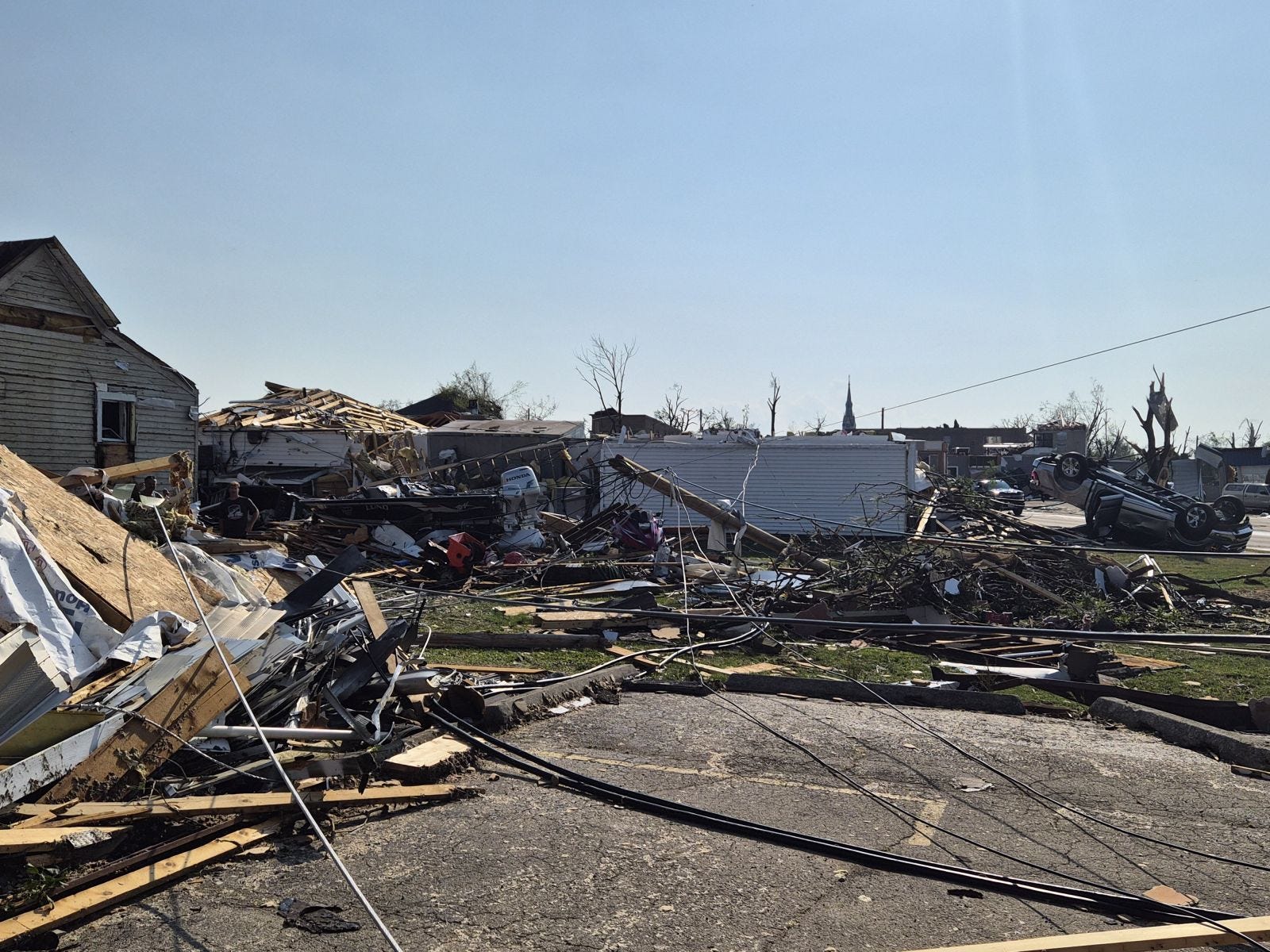
This is damage from the strong tornado that hit Appleton and Menasha Wisconsin last Monday (7-27-26). The twister has been given a preliminary rating of EF3 with peak winds estimated to be 140 mph. Here’s drone video of the damage. Note in the pic. above, there are no leaves or small branches on the trees. You might not guess from this pic. that it’s July.
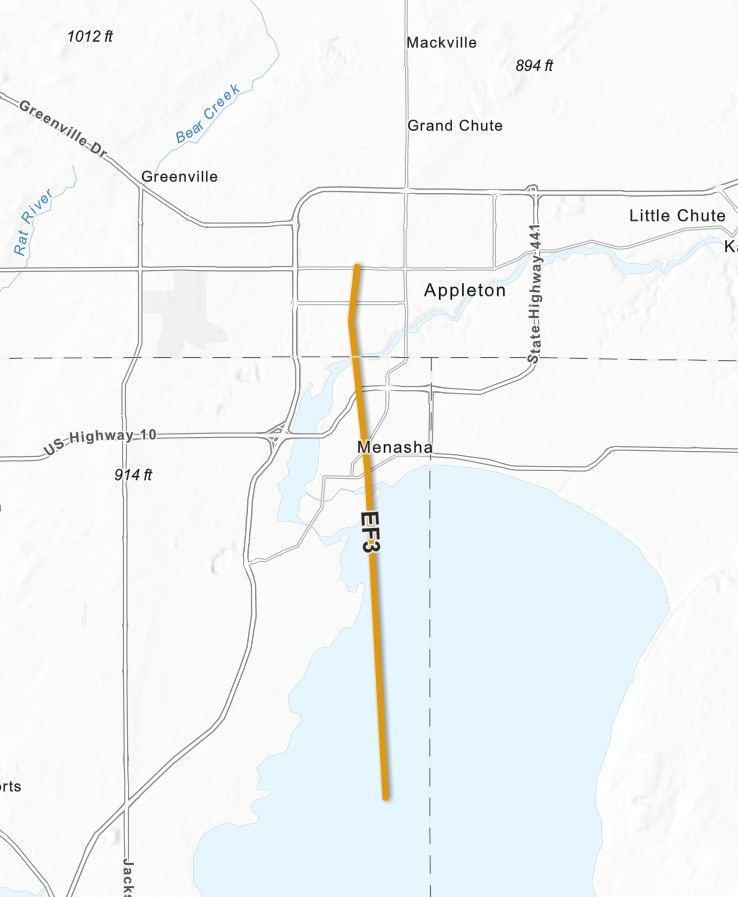
Here’s the path of the storm. It was unusual in that most tornadoes move from southwest to northeast and it’s seldom you get one like this that moves from north to south. It reminded me of the Jerrell, Texas tornado of May 27, 1997. That tornado moved from NNE to SSW and became an EF5 twister. It also produced the infamous “Dead Man Walking picture.

The tornado touched down in Appleton, moved through Menasha than moved out over Lake Winnebago as a waterspout before dissipating.
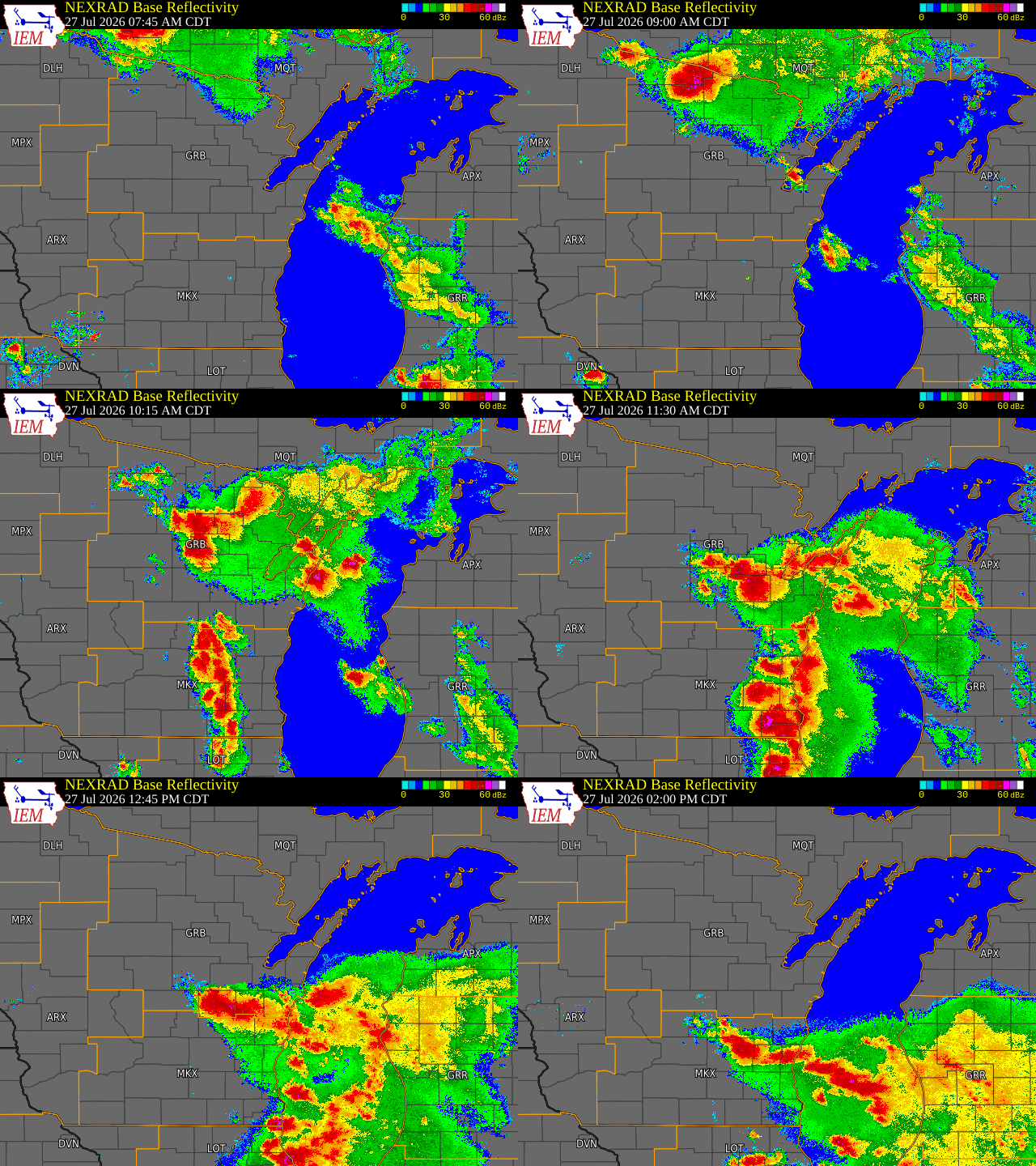
Here’s radar views from Monday. You can see the time stamp above. The tornado was on the ground for at least 26 minutes, from 12:56 pm to 1:22 pm. Radar showed a significant debris ball, indicating that a large amount of debris was lifted thousands of feet into the air.
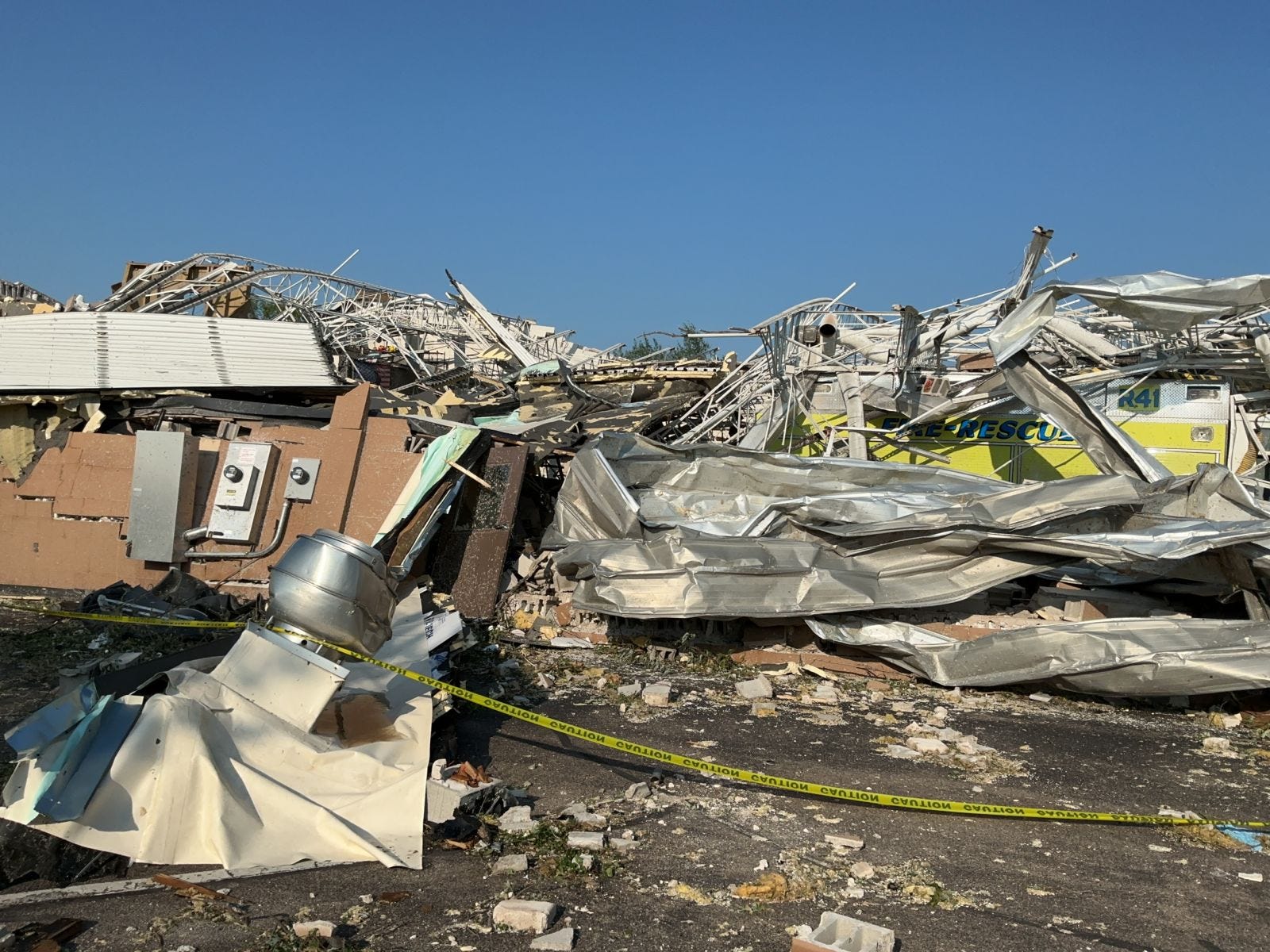
Another pic. of the damage (pics. are from the NWS survey team). There were 68 injuries - people who were treated at two area hospitals. There were no critical or life-threatening injuries.
The storms were also accompanied by wind gusts up to 74 mph and hail up to 4” in diameter (the size of grapefruits). Several other weaker tornadoes hit in Northern Illinois. Illinois continues to lead all the states in the number of tornadoes so far in 2026.
The severe storms moved NNW to SSE, so the storms in eastern Wisconsin and northeast Illinois did not move east into Lower Michigan, but moved south into Indiana and then Kentucky. Lower Michigan had thunderstorms, but outside of a few trees/limbs down in the Glendale area of Van Buren County, West Michigan was spared the severe weather.
Monday/Tuesday there were over 800 reports of severe weather in the U.S.